The Evil Daddy
/
Fitness
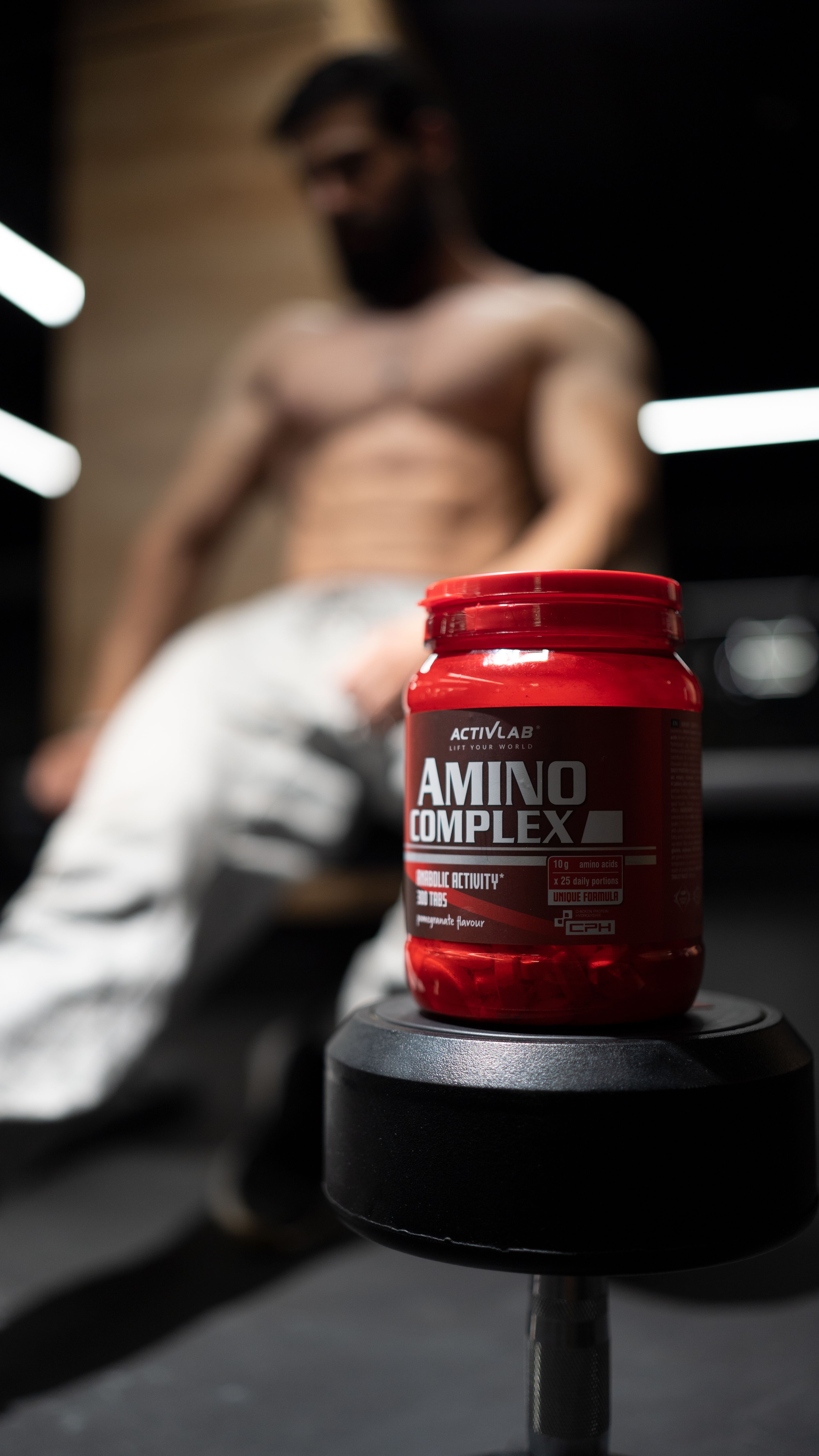
Supplements That Actually Work — and the Bullshit I Wouldn’t Waste My Money On
Protein. Creatine. EAAs. Carb powder. Pre-workout. Testosterone boosters. BCAAs. The supplement aisle is enormous. The list of shit you actually need is considerably smaller.
Walk into any supplement store and apparently the human body requires approximately $700 a month in brightly colored powder just to function.
There are supplements to build muscle.
Supplements to burn fat.
Supplements to increase testosterone.
Supplements to increase energy.
Supplements to improve pumps.
Supplements to help you recover from the supplements you took before the other supplements.
Half the containers look like they were designed by somebody who thinks adding a gorilla, lightning bolt and the word ANABOLIC to a label changes human physiology.
I’ve used plenty of supplements over the years.
Some I genuinely love.
Some have a specific purpose.
Some I wouldn’t spend another fucking dollar on.
So here’s how I look at supplementation.
Not as a replacement for food.
Not as a replacement for training.
Not as a shortcut.
As a supplement to things I’m already doing.
The word is literally in the fucking name.
First: Supplements Come After the Basics
If your diet sucks, you don’t train consistently, you sleep four hours per night and you have absolutely no idea how many calories or how much protein you’re eating, supplements aren’t where I’d start.
Get the foundation right first.
Eat reasonably.
Get enough protein.
Train.
Recover.
Track your progress.
Then supplements can fill particular roles.
Because protein powder can supplement protein.
Carbohydrate powder can supplement carbohydrates.
Creatine can increase muscle creatine stores.
Electrolytes can replace electrolytes.
But none of them supplements giving a shit.
Protein Powder: Absolutely
If you told me I could keep only a few supplements, protein powder would easily make the list.
Not because it’s magical.
Because it’s convenient as hell.
I’ve already talked about how I generally aim for roughly 0.8–1 gram of protein per pound of bodyweight.
I prefer getting most of that from actual food.
Chicken.
Turkey.
Steak.
Fish.
Shrimp.
Greek yogurt.
Milk.
But eventually you reach a point where eating another fucking chicken breast isn’t particularly appealing.
That’s where protein powder becomes useful.
One scoop.
Shake it.
Drink it.
Move on with your life.
Protein supplementation can be an effective way to help meet daily protein requirements, particularly alongside resistance training.
That’s enough for me.
Verdict: I love it.
Creatine: Also Absolutely
Creatine is probably one of the easiest supplement recommendations to defend from an evidence standpoint.
It’s been studied extensively and has evidence supporting improvements in high-intensity exercise performance and resistance-training adaptations.
And unlike half the supplement aisle, creatine has been researched for decades rather than invented last Tuesday.
But there’s an important distinction here.
Creatine Monohydrate Is the Evidence-Based Default
If you’re starting with creatine, monohydrate is the obvious default.
It’s inexpensive.
It’s widely available.
And it’s overwhelmingly the form with the largest body of research behind it.
There are numerous other versions of creatine on the market.
Creatine hydrochloride.
Creatine citrate.
Buffered creatine.
Creatine nitrate.
And probably Creatine Tactical Nuclear Gorilla Edition somewhere on Amazon.
The existence of another form doesn’t automatically mean it’s superior.
Why I Personally Use Creatine HCl
I use creatine hydrochloride—HCl.
Why?
Because I personally tolerate it better.
I’ve experienced less bloating and gastrointestinal discomfort using HCl compared with monohydrate.
That’s my experience.
I’m not telling you research has established HCl as universally superior to monohydrate.
It hasn’t.
For most people, I’d still consider monohydrate the logical place to start.
But supplements have to work in the real world too.
If something bothers my stomach and another option doesn’t, I’m going to use the one that doesn’t make my digestive system declare war on me.
Everyone’s individual response and tolerance can differ.
That’s why I use HCl.
A Note About Creatine and Your Kidneys
For healthy adults, current evidence is generally reassuring regarding creatine and kidney function at studied doses. A recent systematic review and meta-analysis found a small increase in serum creatinine but no significant change in GFR, noting that creatinine can rise from creatine metabolism without necessarily indicating kidney damage.
But here’s where I’m staying firmly in my lane:
If you have chronic kidney disease, impaired kidney function, or another reason your physician is monitoring your kidneys, talk to your doctor before adding creatine.
Don’t take medical advice from a guy on the internet because he has shoulders.
That includes me.
Verdict: Love it. Monohydrate for most people; HCl is what I personally prefer.
Carb Powder: I Love It — For the Right Situation
Carbohydrate powder is another supplement I regularly like.
Especially around training.
Remember how I structure my diet?
I tend to concentrate a significant amount of my carbohydrates around the period when I’m actually training.
Carb powder gives me another convenient way of doing that.
It’s easy to consume.
It’s easy to measure.
And during longer or particularly demanding workouts, I like having carbohydrates available.
Does somebody doing a 35-minute workout after eating a full meal absolutely need intra-workout carbohydrate powder?
Probably not.
That’s the distinction between:
Useful
and
Necessary.
Those aren’t the same word.
For my training and the way I organize my nutrition, carb powder has a purpose.
Verdict: Useful, especially depending on training volume, duration and goals.
EAAs: Useful in the Right Context
EAAs are essential amino acids.
There are nine of them, and your body cannot synthesize them in sufficient quantities on its own, so they have to come from the diet.
I like using EAAs around training, particularly alongside my intra-workout carbohydrates.
There’s a legitimate physiological basis for essential amino acids supporting muscle protein synthesis.
But let’s introduce some common sense.
If you’re already consuming plenty of high-quality complete protein throughout the day, I’m not going to tell you that you need to panic-buy three tubs of EAAs or your muscles will disappear.
They’re another tool.
I personally find them useful within the way I structure my workout nutrition.
That doesn’t make them mandatory for everyone.
Verdict: Useful. Not magical.
BCAAs: Save Your Money
This one is going to piss somebody off.
I used BCAAs too.
And if you’re already consuming enough complete protein or EAAs?
I wouldn’t bother.
BCAAs are branched-chain amino acids:
Leucine.
Isoleucine.
Valine.
They’re important amino acids.
Leucine in particular plays an important signaling role in muscle protein synthesis.
But here’s the problem:
Building new muscle protein ultimately requires the complete set of essential amino acids.
Research has found that BCAAs can stimulate anabolic signaling and some muscle protein synthesis, but the response is smaller than what is seen from a complete protein source providing the full complement of indispensable amino acids.
So if I’ve got the choice between standalone BCAAs and complete protein or EAAs?
I’m taking the complete package.
BCAAs aren’t useless molecules.
I just don’t see much reason for me to buy them separately when my diet and supplementation already provide what I need.
Verdict: Save your fucking money.
Pre-Workout: You Don’t Need It — But I Get It
Do you need pre-workout to lift weights?
No.
Does pre-workout occasionally make you considerably more enthusiastic about lifting something heavy after a long shitty day?
Absolutely.
😂
This category gets complicated because “pre-workout” isn’t one ingredient.
It’s a bucket.
Different products contain different combinations of caffeine, citrulline, beta-alanine, electrolytes and seventeen other things somebody decided needed to taste like radioactive blue raspberry.
Some ingredients have legitimate evidence behind them.
Others are label decoration.
Caffeine
Caffeine works.
It’s one of the most established performance-enhancing substances available legally, with evidence for improving several aspects of exercise performance.
But more caffeine isn’t automatically better.
And if you train late at night and 400 mg of caffeine means you’re staring at your ceiling at 3 AM contemplating your childhood?
Congratulations.
Your pre-workout just fucked up your recovery.
Sleep matters too.
Citrulline
Citrulline is commonly used for blood flow and the coveted gym pump.
There is research suggesting potential performance benefits under some circumstances, although results vary depending on dose, exercise and study design.
I consider it potentially useful.
Not mandatory.
Beta-Alanine
Beta-alanine has legitimate evidence behind it too, particularly for certain types of high-intensity exercise where muscular acidosis contributes to fatigue.
It’s also responsible for that familiar pre-workout experience where your face suddenly feels like it’s being attacked by invisible ants.
That sensation doesn’t mean the supplement is working better.
It means beta-alanine can cause paresthesia.
Congratulations.
Your ears itch.
Verdict on pre-workout: Optional, potentially useful, definitely not required.
Electrolytes: Depends on What You’re Doing
Electrolytes are another perfect example of a supplement whose usefulness depends on circumstances.
If you’re training hard, sweating heavily, exercising for prolonged periods, training in heat or losing significant fluid, replacing electrolytes can make sense.
If you walked twelve minutes on a treadmill inside an air-conditioned gym?
You probably don’t need a $6 neon beverage formulated like you’re crossing the Sahara.
Context matters.
Fish Oil: Maybe
If somebody rarely eats fatty fish, omega-3 supplementation may be worth discussing depending on diet and individual circumstances.
But again, supplements shouldn’t automatically replace food.
I eat fish.
Someone else’s diet may look completely different.
This is exactly where blanket recommendations become stupid.
Verdict: Potentially useful depending on diet and circumstances.
Vitamins and Minerals: Fix a Reason, Not a Marketing Campaign
Vitamin D.
Iron.
B12.
Magnesium.
Zinc.
There are legitimate reasons someone might need more of a particular micronutrient.
But I don’t believe in randomly megadosing shit because a podcast host told me everybody is deficient.
Diet matters.
Sun exposure matters for vitamin D.
Medical conditions matter.
Medications matter.
Lab testing can matter depending on the nutrient and circumstances.
If you have an actual deficiency or your clinician identifies a reason for supplementation, that’s very different from buying sixteen bottles because someone used the phrase OPTIMAL HUMAN PERFORMANCE.
Verdict: Correct deficiencies and address actual needs. Don’t collect supplements like Pokémon.
Testosterone Boosters: Don’t Waste Your Fucking Money
Oh, this category.
Walk into a supplement store and you’ll find bottles promising:
TEST BOOST.
ALPHA MALE.
MAXIMUM T.
ANABOLIC TEST SUPPORT.
Usually accompanied by a furious gorilla who apparently has outstanding endocrine function.
Here’s my approach:
If you genuinely believe your testosterone is low, get evaluated.
Don’t diagnose yourself because you’re tired on Wednesday.
Talk to your physician.
Get appropriate bloodwork if medically indicated.
Figure out whether there’s actually a problem.
Then discuss your options with someone qualified to diagnose and treat it.
A 2024 systematic review examined 27 proposed testosterone boosters and concluded that most failed to increase total testosterone.
Another study looking at commercially marketed testosterone boosters found that many ingredients lacked supporting evidence for their claims.
So no:
I’m not spending $59.99 on TESTICULAR THUNDER FUCK 9000™ because the bottle has flames on it.
😂
Verdict: If you suspect a legitimate hormonal issue, talk to your doctor instead of the gorilla on the bottle.
Testosterone itself deserves a separate article because that subject gets absolutely butchered online.
We’ll get there.
Fat Burners: Manage Your Expectations
This is another industry gold mine.
People want something they can swallow that will compensate for eating too much.
That’s an extraordinarily profitable desire.
Some products contain stimulants that can affect energy expenditure, appetite or exercise performance.
That does not mean the bottle has discovered a loophole in energy balance.
If fat loss is the goal, the foundation remains:
Calorie control.
Adequate protein.
Resistance training.
Activity.
Consistency.
A capsule isn’t going to turn a sustained calorie surplus into shredded abs.
If it could, there wouldn’t be an obesity problem.
Verdict: Don’t build your fat-loss strategy around a bottle.
The Supplement Hierarchy
If I were starting over and had limited money, I wouldn’t walk into a supplement store with a shopping cart.
I’d buy food first.
Then I’d consider the supplements that solve an actual problem.
Need a convenient way to reach my protein target?
Protein powder.
Want one of the most researched performance supplements available?
Creatine.
Need convenient carbohydrates around demanding training?
Carb powder.
Like EAAs during training and they fit my nutrition setup?
Fine.
Want caffeine before a difficult workout?
Also fine.
But if I’m choosing between $200 worth of supplements and buying enough quality food for the week?
I’m buying the fucking food.
Supplements Should Solve Problems
That’s probably my biggest rule.
Don’t ask:
“What supplements should I take?”
Ask:
“What problem am I trying to solve?”
Can’t consistently reach protein target?
Protein powder solves something.
Training for a long time and want easily digestible carbohydrates?
Carb powder solves something.
Want the performance benefits associated with creatine?
Creatine solves something.
Sweating heavily in the Las Vegas heat?
Electrolytes may solve something.
Already eating adequate protein and considering another $45 tub of BCAAs because the label looks cool?
What exactly are we solving?
That’s the question.
Nothing in the Tub Replaces the Work
I’ve used supplements for years.
I’ll continue using supplements.
I like them.
Some genuinely make my diet or training easier.
Some have strong evidence.
Some have narrower applications.
Some are mostly very expensive urine.
But none of them replaces the foundation.
Train consistently.
Eat appropriately for your goal.
Get enough protein.
Sleep.
Recover.
Monitor progress.
Then add supplements where they actually serve a purpose.
Because the supplement industry is very good at selling the idea that the thing standing between you and the physique you want is something you haven’t bought yet.
Usually?
It isn’t.
⭐⭐⭐⭐☆
Five stars require a scoop.
Raw sources
https://pubmed.ncbi.nlm.nih.gov/28642676/
https://pubmed.ncbi.nlm.nih.gov/41199218/
https://pubmed.ncbi.nlm.nih.gov/42507286/
https://pubmed.ncbi.nlm.nih.gov/37681443/
https://pubmed.ncbi.nlm.nih.gov/28852372/
https://pubmed.ncbi.nlm.nih.gov/20205813/
Join the Conversation
Comments are not active yet.
KEEP READING
Fitness
Vitamins, Minerals and Shit You’ve Never Heard Of: How I Think About Fixing Bad Bloodwork
Vitamin D, zinc, iron, copper, NAC, TUDCA, berberine and citrus bergamot. Here’s what I’ve used, what these compounds actually do, and why I believe in measuring the problem before throwing supplements at it.
Fitness
Bloodwork: The Man Behind the Man Behind the Man
You know what you weigh and what you look like. But what do your CBC, glucose, A1c, ApoB, creatinine, cystatin C and liver markers actually say? Here’s how I think about bloodwork without pretending I’m my own doctor.
Fitness
Stop Guessing: 5 Tools I Use to Track Fitness Progress
The scale doesn’t tell the whole story. Here’s how I use bodyweight, the mirror, progress photos, a tailor’s tape and skinfold calipers together to figure out whether my training and diet are actually working.
EXPLORE THE EVIL DADDY
Dad Life • Travel • Money • Garage • Fitness • Photography • Evil Baby Lore
About • Contact • Privacy • Disclosure • Gear